I’ve started small.
A small grant and an orchard taught me to make the most of what was available. We can test an idea, use a partner or build in stages. A substantial budget deserves the same care: every investment should serve the project.
The experience behind the advice
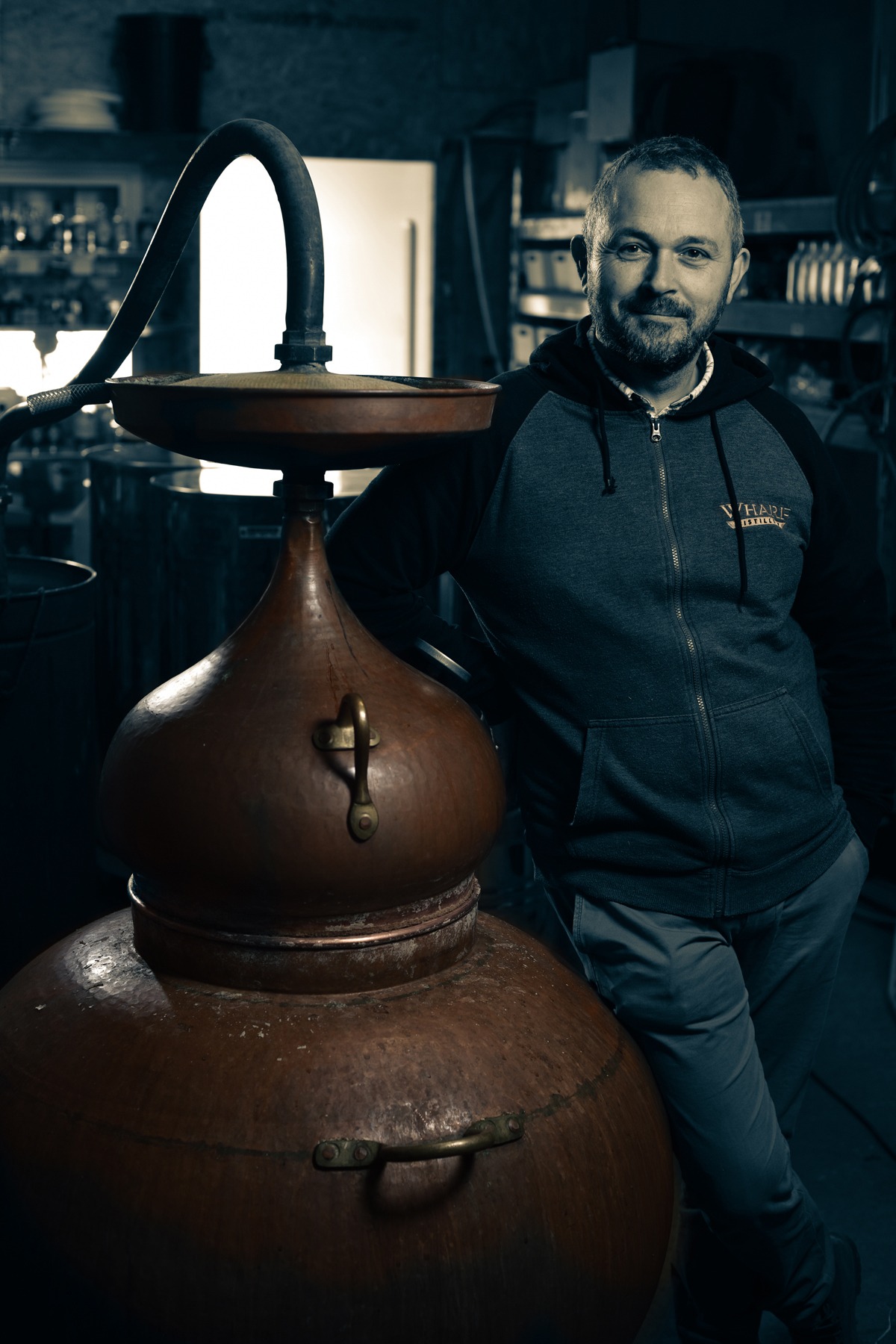
Cider maker, distiller, product developer and business owner. More than three decades of making drinks, building an operation and helping other producers find their way.
A maker’s way of thinking
In 1995, I went back to college to study conservation management and biological surveying. My grant was small. Oversized cabbages and sacks of carrots stretched the food budget, with enough left for about a pint of beer a week. But I had access to an apple orchard.
Necessity gave me a reason to start making cider. Hogshead Cyder, in North Essex, grew from that beginning, and what started as a practical answer became a passion. With very little to spend, every piece of equipment had to earn its place.
By 2009, I had spent two years watching fieldfares descend on the fallen apples in my garden each autumn, while putting off doing something with them. It was Carol, my mother-in-law at the time, whose encouragement — and a cheque for £1,000 — finally got me moving. Virtual Orchard began with a press, the fruit available and a willingness to get on with it.
Garden apples soon became almost a thousand litres of juice. Fruit arrived from around a dozen separate orchards within ten miles, giving the “virtual orchard” its name. Three generations of the family helped collect, crush, press and package it; the spent apple pomace went to a local farm’s pigs.
Before leaving my IT career to build the business, I worked through two practical questions: was there enough demand, and could I source enough local fruit to make it pay? The habit has stayed with me: prove what needs proving, choose a workable scale and invest where it makes sense.
The journey so far
Products, premises and markets changed. Each stage brought a different decision about what to make, how to make it and where the business should go next.
Recognition along the way
Numerous awards from internationally recognised spirits competitions, earned across years of hands-on production and product development.
I founded Hogshead Cyder in North Essex, becoming one of the county’s first commercial cider makers, before “craft” was even a thing.
With encouragement and a £1,000 cheque from Carol, my mother-in-law at the time, I started Virtual Orchard, putting otherwise wasted fruit to use. Virtual Orchard was the first commercial cidermaker in Milton Keynes. I incorporated the business as Virtual Orchard Ltd in 2012.
A chance meeting with a fledgling distiller near Cambridge led to our first apple brandy, made from our own cider. Working with a partner let us develop the product before investing in our own distilling operation.
I formed Virtual Orchard Ltd and moved the business to an old timber yard at Galleon Wharf, beside the Grand Union Canal in Old Wolverton, Milton Keynes. With a larger press, cider production reached 18,000 litres that autumn; apple juice and mead were also part of the business.
We began offering contract cidermaking as other producers started to emerge.
We received HMRC distilling approval in 2014 and began making apple brandy under our own licences. As the first recorded distillery in Buckinghamshire, we also began offering contract distilling; our first client was a vineyard in the county.
A conversation over coffee with a local brewer became a collaboration to make English whiskey. Together we developed the mash bill; he made the wort and I distilled it. Our first cask was a 55-litre ex-Madeira octave. We were only the fourth English distillery to start making whiskey in more than 100 years.
A forced move from the canal led to Potterspury, Northamptonshire. Smaller premises, a growing local cider market and competing seasonal demands called for a rethink. We sold the large apple press, invested in another copper still and rebranded as Wharf Distillery, focusing on spirits.
Our first cask reached three years of maturation in October, marking the first whiskey recorded in Buckinghamshire and Northamptonshire.
We released Cattle Creep in January, becoming only the eighth English distillery to release a whiskey since 1903. A collaboration that started over coffee had become a finished product.
When lockdown halted trade orders and development projects, we expanded local delivery and repurposed production to make hand sanitiser. Supplies went to local organisations and charities, and we matched each litre funded by donations with another litre. Practical diversification helped keep the business working.
We relocated to our current premises in Towcester, Northamptonshire.
As a founding member, I championed equitable standing for the smallest distilleries alongside larger producers, including those making whiskey on a small scale rather than for mass markets.
150+ clients supported and 200+ products developed across client and in-house work, with numerous awards from internationally recognised competitions along the way. That experience underpins The Spirit Maker.
What that means for your project
That experience helps me understand your options and recommend a practical next step.
A small grant and an orchard taught me to make the most of what was available. We can test an idea, use a partner or build in stages. A substantial budget deserves the same care: every investment should serve the project.
The move from cider to spirits came from reviewing space, seasonality and the market. I can help you examine the practical consequences of a new direction before committing.
Contract work grew from requests by other cider makers, brewers and wine producers. I have helped new brands bring ideas into production, including clients who later went on to buy their own stills.
“We don’t follow history.
We create it.”
Laurence Conisbee · From spark to spirit.
Your next chapter
Tell me about your idea or the question you need answered. We’ll work out a practical next step.
Send a project enquiry ↗